TransUnion Design Culture & UX Labs
Snapshot (Challenge • Role • Audience • Constraints)
Challenge
My Role
Audience
Constraints
15‑year‑old legacy systems and patterns
Human‑centered design was brand new to the business
Strict regulatory environments
Many parallel product teams with different goals and processes
Need for speed, credibility, and business alignment from day one
Starting from zero: building credibility inside a legacy enterprise
We were a brand‑new team in a very established organization. Our first job was to listen—to understand motivations, constraints, and the decision‑making culture. To earn trust quickly, we focused on small, high‑impact wins: rapid UI improvements, tightly scoped research, and fast prototypes that solved real problems.
This combination of speed, scrappiness, and quality helped us show value immediately. Within the first year, we had introduced our own design‑thinking approach, established key partnerships across departments, and earned a meaningful seat at the table.
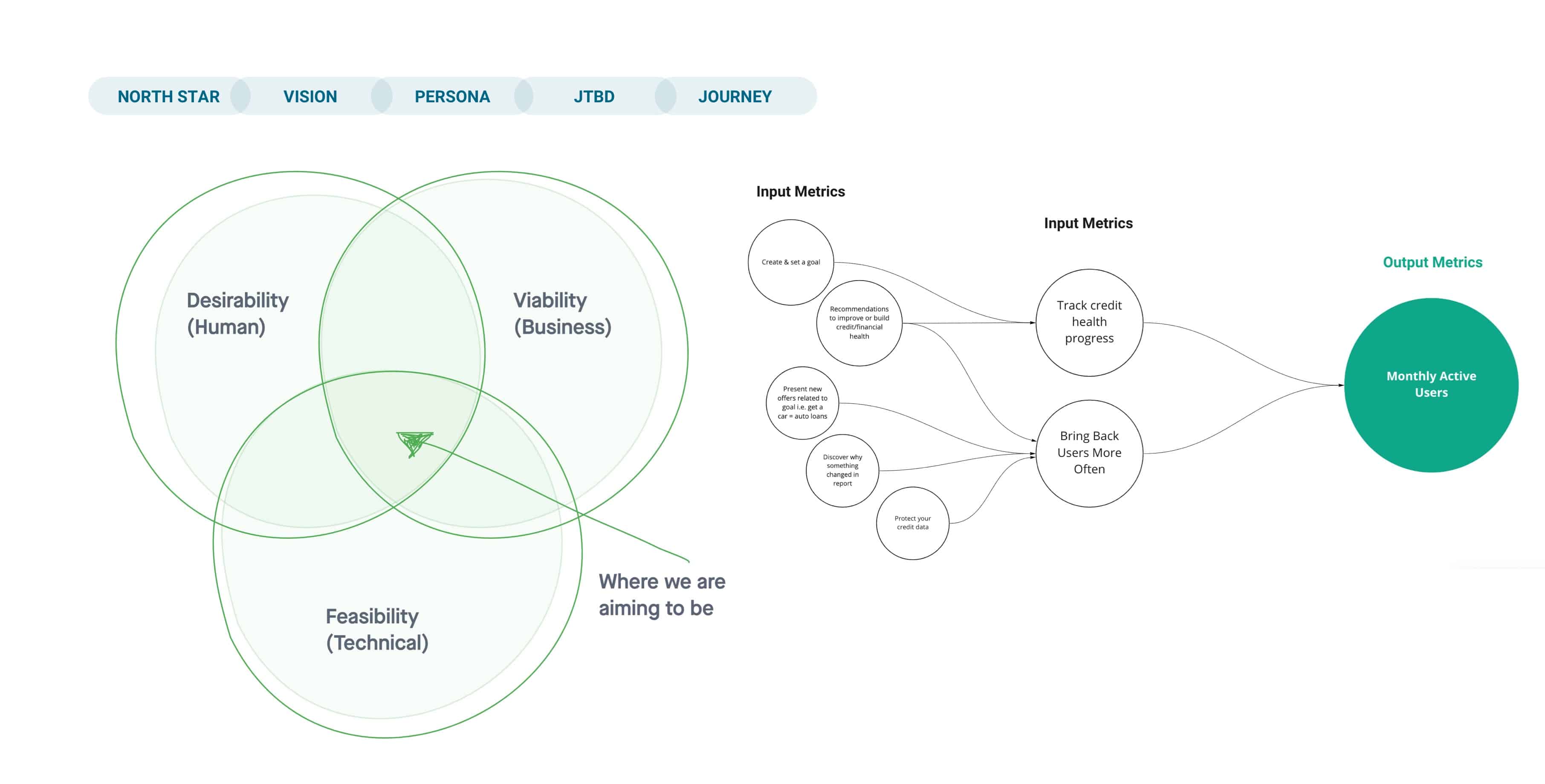
Linking human‑centered design to business outcomes
From the beginning, we tied design decisions to outcomes executives care about: Increasing engagement, increasing revenue, reducing support & operational costs, improving customer satisfaction, and strengthening partner relationships
Our philosophy was simple:
If we build experiences that are beautiful, usable, meaningful, and emotionally resonant, customers will feel confident and supported—and the business will grow as a result.
Putting design front and center
To build transparency and cross‑functional trust, we created the UX Design General Assembly—a monthly open forum where anyone across the company could see work in progress:
- Rolling research insights
- Early wireframes
- Prototypes
- Stakeholder feedback
- UI demos
Attendance grew to 75+ active global participants each month. We collected ongoing feedback to measure value and refine how we communicated our work.
Celebrating the work to strengthen culture
Launching TU Design & UX Labs — an internal consulting model
In 2020, we formalized our impact by creating TU Design Labs—a rapid‑problem‑solving and innovation engine that deployed UX talent to:
- Reduce compliance risk
- Support sales opportunities
- Improve product quality
- Accelerate roadmaps
- Strengthen partner relationships
- Drive new business
We supported major deals by “selling the experience, not the feature,” using quick-turn consumer feedback, vision prototypes, and scenario videos to help partners and executives imagine what was possible.
Outcome (Highlights)
Organization
A modern design system that improved consistency, accessibility, velocity, and quality.
Clear operating model, rituals, and governance that aligned design, product, and engineering.
A culture of transparency, shared learning, and customer empathy across departments.
Business
Faster decision‑making, reduced rework, and better alignment with product roadmaps.
Stronger support for sales, innovation, and partner enablement through TU Design Labs.
Clear linkage between UX quality and revenue, retention, cost savings, and partner satisfaction.
People
A more confident, empowered design team with stronger craft, process clarity, and growth pathways.
A reputation for being collaborative, strategic, and essential to the product development lifecycle.