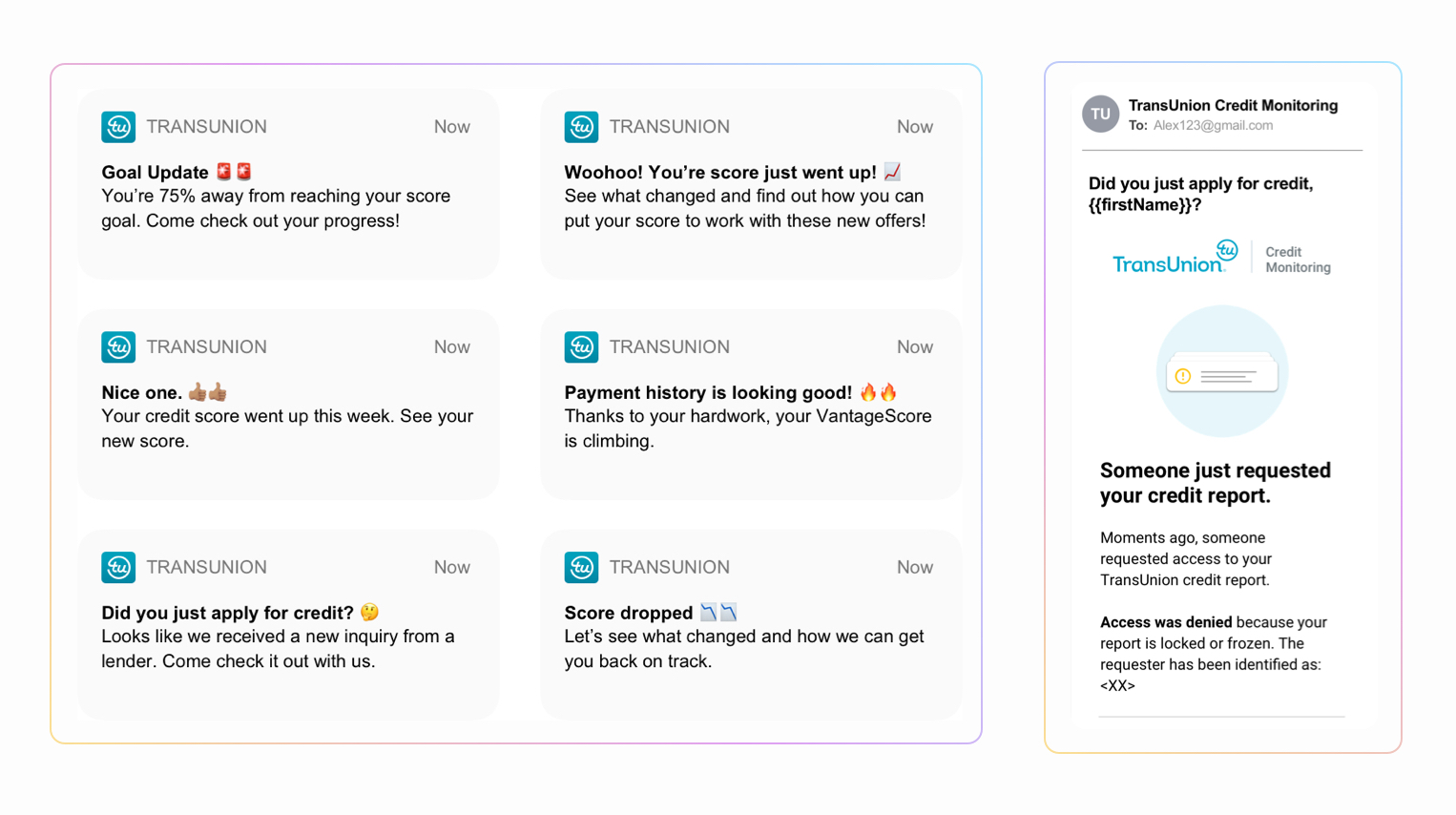
TransUnion D2C Evolution Overview:
As Senior Director of Product UX & Design, I led the end‑to‑end evolution of TransUnion’s D2C ecosystem—clarifying how people understand their credit, reducing friction in sensitive account tasks, and modernizing the UI with a systemized, accessible design language that scales across products and partners.
Snapshot (Challenge • Role • Audience • Constraints)
Challenge
Customers needed clearer, more guided ways to understand credit health and identity risks. Legacy account‑access flows (username/password recovery, device verification) caused friction, cancellations, and unnecessary support volume.
My Role
Set the experience vision and principles, lead research and design across web and app, and partnered with product, engineering, data, compliance, and support operations through delivery.
Audience
Tens of millions of consumers using TransUnion’s credit & identity experiences.
Constraints
Enterprise complexity (legacy systems, regulated content), strict accessibility targets, and multi‑team alignment.
Outcome (highlights)
Flagship D2C Redesign & Accessibility
Modernized visual language and information architecture across web and app.
Delivered ADA/WCAG‑aligned patterns to expand inclusive access and improve usability across key flows.
Established long‑term design foundations to accelerate delivery velocity.
Unified Login & Cross-Site Journey
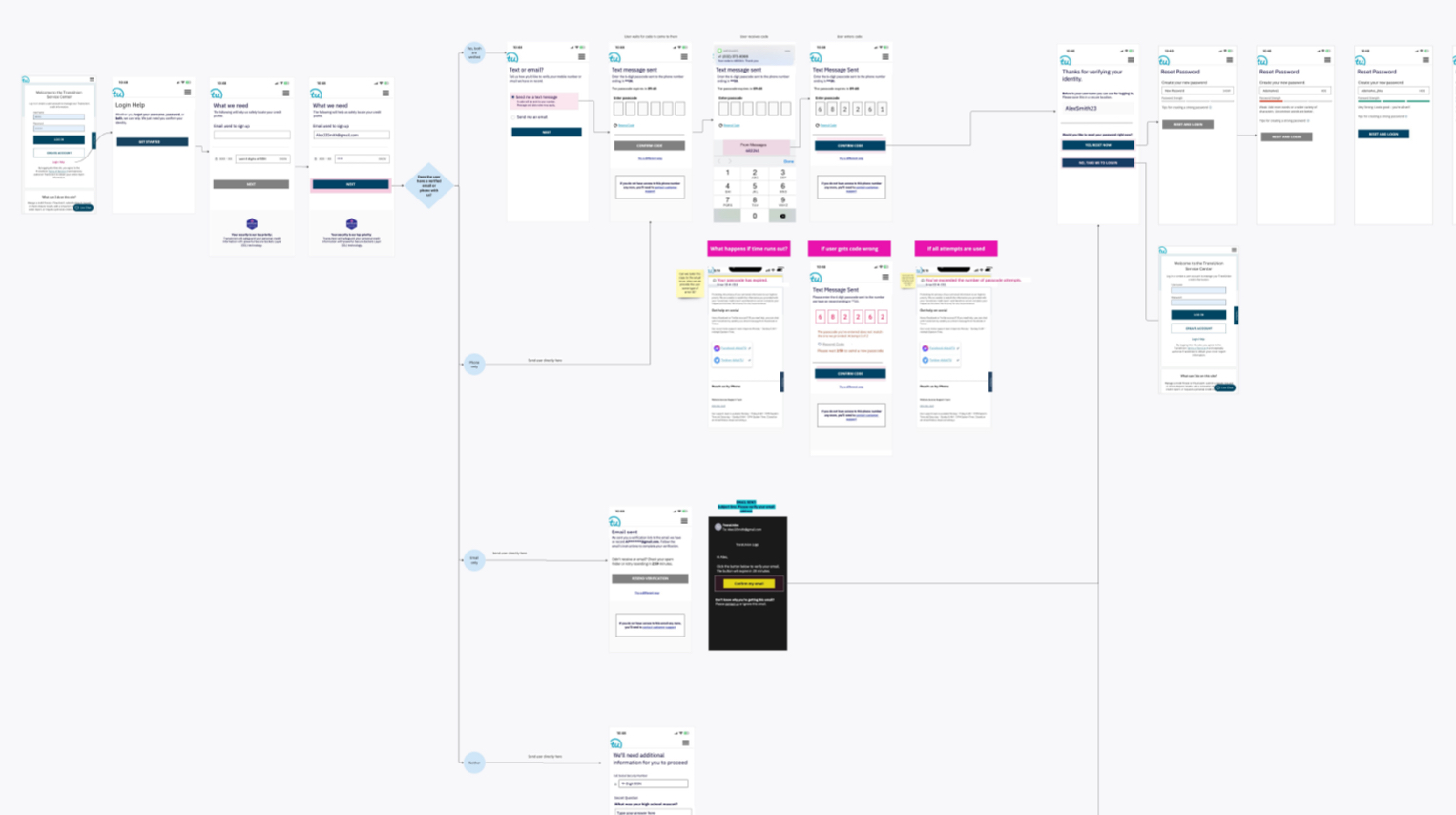
We unified previously fragmented identity experiences into a single login flow spanningcom → enrollment → product access, improving access for 8.4M consumers annually. The new system simplifies sign‑in and recovery, adds flexible authentication, and establishes one access point across all D2C products—dramatically reducing support dependency and operational costs.
By introducing proactive verification, we addressed core friction points: ~10% of users canceling due to login issues, 3% struggling with verification codes, and 36% contacting support due to outdated email. These fixes drove ~$250K/year in support savings and ~$300K/year in retention revenue.
A full overhaul of username/password recovery—targeting the 41% of issues tied to usernames and 45% to passwords—shifted consumers to confident self‑service and generated an additional $5M/year in savings.
Credit Education that Scales
We transformed credit understanding into a self‑serve experience by centering the product around personalized Score Factors. Today, 23.6% of all monthly engagement happens in Score Factors—now the primary lens for understanding and improving credit health. Previously, 25.2% of consumers contacted support to interpret score changes; that need has now shifted to intuitive, in‑product education.
Action-Ready Credit & Loan Offers
Embedded personalized credit & loan offers at high‑intent moments—optimized for visibility without disrupting learning.
Connected education to action, increasing “Apply” clicks and improving offer relevance.
Premium Identity & Service Continuity
Clear upgrade path to premium identity features (3‑bureau monitoring, alerts, restoration).
Enabled single sign‑on to our secondary product “TransUnion Service Center” for disputes, freeze, and fraud alerts—removing double account management friction.
Cost‑to‑serve & retention
Addressed authentication pain points with proactive verification and streamlined recovery, saving ~$250K/year in support costs and increasing retention revenue by ~$300K/year. Overhauled username/password recovery flows (41% and 45% of issues respectively) to confident self‑service, saving ~$5M/year.
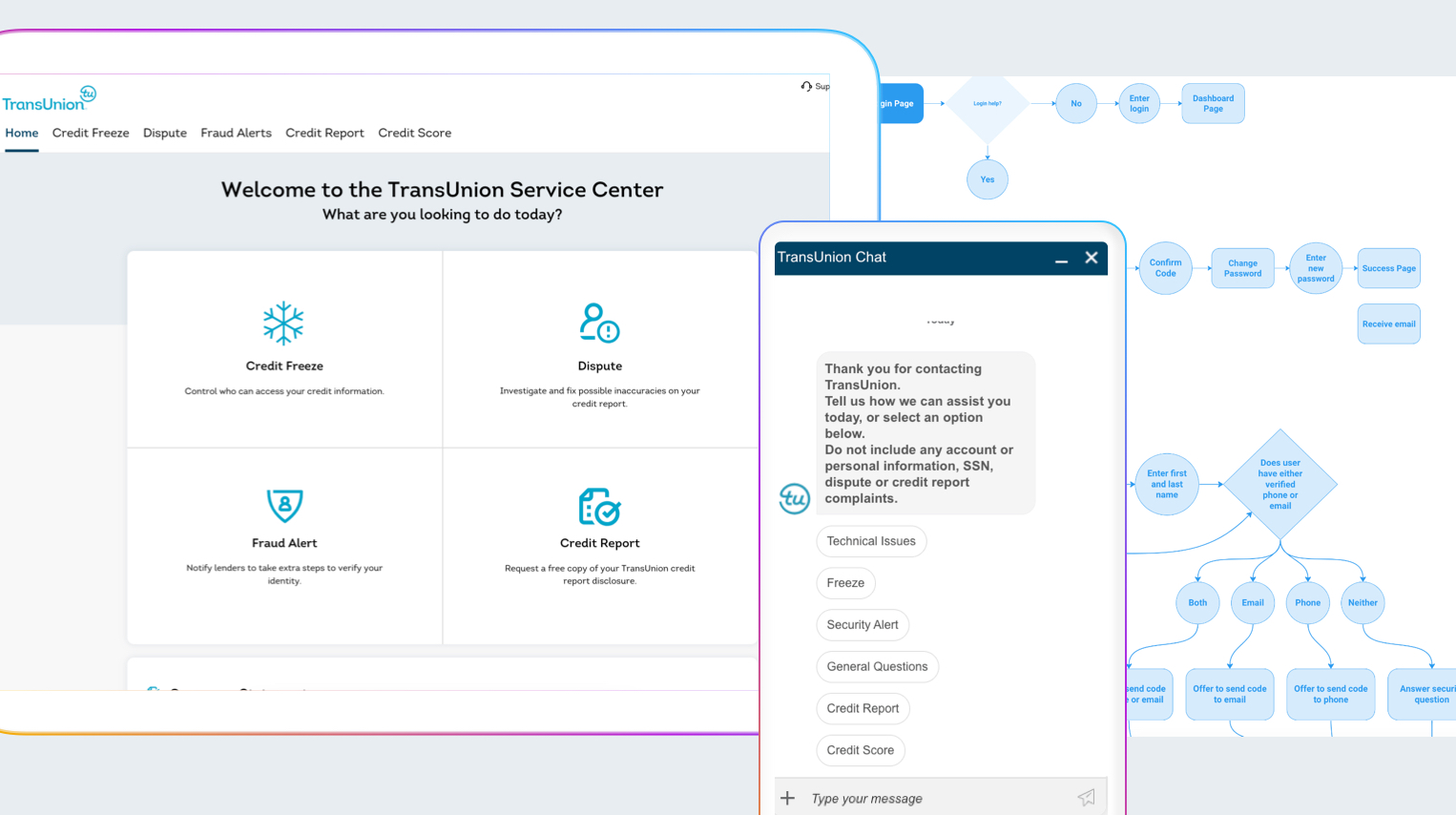
Systemization & Velocity
Modernized the design system to raise consistency and accessibility by default, enabling 6× faster FE delivery, +60% design team productivity, and $5M+ ADA/usability savings.